Women in Sound Art
7 Musical Micro-Portraits
The
20th century witnessed an explosion in technology, music, and sound
art. Composers like Pauline Oliveros and Alice Shields found the
intermeshing of music with technology created an even more expansive
orchestral palette, incorporating analog synthesizers, tape, and
computer music to create new exciting interactive musical works. Sound
Art, electroacoustic music, electronic music, computer music – the field
itself seems to defy definition. As composer Annea Lockwood states,
Sound Art is "a liberating term – so broad that it escapes category,
encompassing work in any audible medium, from anyone from whom sound is
central."
1
Such a broad field as Sound Art includes literally hundreds of talented musicians spanning the globe. From emerging 21
st century
composers like Hsiao-Lan Wang, Kristina Wolfe, and Jaclyn Heyen, to
established musicians like Judith Shatin, Laurie Spiegel, Laurie
Anderson, Susan Frykberg, Pamela Z, and Ximena Alarcon-Diaz. Resources
like Elizabeth Hinkle-Turner’s
Women Composers and Music Technology in the United States, and Tara Rodger’s
Pink Noises: Women on Electronic Music and Sound cover
the topic of women in music technology in more depth. What follows are
seven snapshots of contemporary women involved in various aspects of
sound art, including musical explorations in performance and
improvisation, multimedia, zoömusicology, and avant-garde classical
composition. These portraits will give you a tantalizing taste of
contemporary Sound Art’s multifaceted interface.
I - Pauline Oliveros
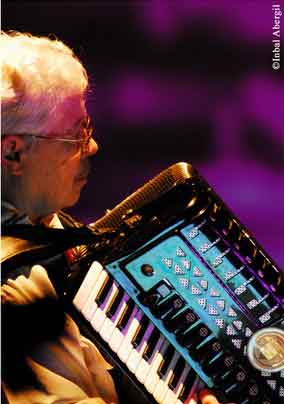
© Inbal Abergil
With
an incredible career spanning several decades of music making, composer
Pauline Oliveros is a legend in electronic music. In 2012 the
Foundation of Contemporary Arts awarded Oliveros with the John Cage
Award in recognition for outstanding achievement. From developing the
meditative Deep Listening system to innovating approaches of live
processing with the Expanded Instrument System (EIS) to co-creating the
Adaptive Use Musical Instruments, a cutting-edge technology that allows
impaired individuals to create electroacoustic music, Oliveros impacts
the field of music technology and sound art on multiple levels. Oliveros
continues to embark on exciting new journeys of sound art and
improvisation with projects like the Telematic Circle, an international
exclave that uses broadband and iChat as a means of creating
"telepresent music performances."
2
The Oliveros Expanded Instrument System, or EIS, provides an
interesting method of creating sound art. The EIS, originally developed
in 1965 with tape delay and tape machines, has evolved to include
software like MaxMSP and the latest computer gadgetry.
3 The
EIS reprocesses a live improvisation, essentially sending the signal
through preset software parameters that then emit the sound through a
multi-channel speaker set-up that may include multimedia and live video
processing. While this tech-speak sounds complex, what it actually
sounds like is an immersive environment where the performer and audience
enter a state of meditation as the echoing sound loops reverberate
throughout the space. Oliveros sits in a web of wiring, her accordion
and percussion instruments part of a tangled complex system of foot
pedals, switches, software, and controllers. As she blows into a conch
shell, improvises on various percussion instruments, and performs on her
trusty accordion, complex sounds echo, delay, and wash over the
listeners with deep waves of sonority. Oliveros continues to imbue her
musical philosophy to each generation through the Deep Listening
Institute and her quest for innovation.
II - Maggi Payne
The
complex electroacoustic works of Maggi Payne encompass an array of
intricate and complex synthesis, lush abstract videos accompanied by
immersive soundscapes, and avant-garde acoustic compositions. Payne says
of her works: "All of my work is sound-driven: each grows and evolves
as do crystals forming under the microscope."
4 Interestingly,
many of Payne’s films include crystal growing slowly under the watchful
eye of the microscope and other incredibly abstract natural imagery.
Payne’s sound art has uniqueness all its own, with an ingenious
approach to sound synthesis and the visual. Often collaborating with
video artists and dancers in her sonic explorations of the micro
natural, works like
Here Wait,
Desertscapes, and
System Test (Fire and Ice) create an audiovisual world that is at once familiar and quite alien.
System Test (Fire and Ice)
combines manipulated sounds of ice melting, paper, and Jacob’s ladders
with multimedia, creating danger, powerful frequencies, and intense
sizzling of electrical discharge.
5 Here Wait
fills the hall with a deep rumbling wash of sound as two dancers move
mirror-like using angular motions projected via video. While not a work
of traditional sound art,
Desertscapes takes the soundscape out of the electronic realm and into the concert hall through spatially separated
a capella female
choirs treated not unlike sound waves manipulated through synthesis.
Maggi Payne continues to inspire and create works of incredible alien
beauty through complex synthesis, stunning visual works, and an uncanny
ability to combine the audiovisual into a surreal sonic landscape.
III - Alice Shields
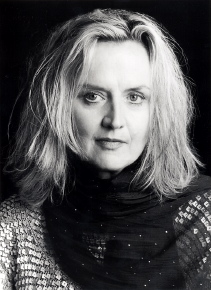
Interweaving
vocal music, dance, and electroacoustic music into dramatic works of
operatic proportions, composer Alice Shields is a bastion in the world
of electroacoustic music with an impressive array of complex
compositions combining vocal music, dancers, and tape. Her lengthy list
of large-scale multimedia works includes the opera
Apocalypse and the poignant
Mass for the Dead.
Since her earliest days at the Columbia-Princeton Electronic Music
Center in the mid-1960s, Shields has infused sound art and
electroacoustic music with a mosaic of august compositions.
Compositions like
Dust combine Shield’s fascination with
classical Indian rhythms, instrumentation, and melodies with a masterful
manipulation of voice and sound. Like
The Mud Oratorio,
Invocation, and
Shenandoah,
Dust is
both a standalone composition and a work meant for dance. The
transcultural collaboration built a bridge between East and West through
national tours in both North America and India and a conscious effort
to combine both traditional spirituality and musicality.
6 Alice Shields continues to broaden her musical horizons with compelling works of grand proportions.
IV - Adina Izarra
Venezuelan
composer Adina Izarra’s electronic works delve into a complex world of
Supercollider synthesis, multimedia, and zoömusicology, specifically in
relation to birdsong’s anthropological implications. Sound art opens up
the mind’s ears to what Izarra calls the "problems of pitch material",
bringing to light all types of sound.
7 By opening
up the very definition of music to a more Cageian sense of sound as
music, a composer can expand artistic creation beyond conventional
pitch, rhythm, melody, and harmony.
A recent work of Izarra’s exemplifies the composer’s passion for
birdsong and electroacoustic manipulation. The interactive composition
titled
SISTEMAS VOLATILES combines Max/MSP with bird sounds and
live flute performance. The flautist controls and convolutes complex
bird sounds using software manipulations in the live setting. In this
way, Izarra creates an interesting three-movement work that uses
aleatoric algorithms, convolution, speed changes, and filters to create
an ever-changing exploration of melodic flute and birdsong through
Max/MSP and an array of pedals and filters. While not all of Izarra’s
works fit within the scope of sound art, the crux of her musical
discoveries for the past decade continue to combine a mature fascination
of avian sounds and electronics.
8
V - Brenda Hutchinson
From earlier experimentations with the Long Tube, a 9 foot tube for performance with interactive electronics, to her
dailybell series and current social sonic experiments in the work
What Can You Do?,
Hutchinson has taken sound art to new spaces of experience and
creativity expanding even to virtual worlds like the Avatar Orchestra
Metaverse in the game
Second Life. What drives Hutchinson’s art?
The composer has a keen interest in the function of music as what she
describes as "primal" communication and the social aspects of music
making as a communal activity.
What Can You Do?
provides a means for exploring the ideas of music as a communal and
social interaction. In this pseudo-performance art piece, performing
pairs approach strangers in an attempt to interact on a musical and
social level. One member asks a stranger about a special talent, usually
related to music. After a demonstration from the stranger the first
performer attempts to mimic the talent while the other interprets the
entire interaction through visual, written, or recorded documentation.
Through
What Can You Do? Hutchinson breaks the "invisible bubbles" in the "fractured, often hostile public space."
9

© 2008 San Francisco. Still from video by Brenda Hutchinson
Improvisation, Sound Art, and interaction have been key elements in Hutchinson’s works from her 1972 tape and performance work
A Grandmother’s Song to
Tiny Offerings, a 2010 collaborative performance work between artists and farmers at Project Grow.
10 The
sound of Brenda Hutchinson transcends the concert hall through direct
social interaction and inventive communal approaches to traditional
electroacoustic music.
VI - Annea Lockwood

Exploring
the many miniscule facets of sounds, from didgeridoos to cats purring
to colanders swinging over the heads of the audience, Annea Lockwood
uses the many found sounds in our world to create complex large scale
compositions like
A Sound Map of the Hudson River, a work of
sound art derived from her fascination with rivers, steams, and springs.
As mentioned in a review by Julian Cowley, "The essence of Lockwood’s
compositional act has been discovery through attentive listening rather
than radical intervention."
11 A journey into the
musical world of Lockwood reveals the beauty and meditative spirit of
the natural (and sometimes unnatural) world around us in the truest
spirit of sound art.
Like many composers involved in new music, Annea Lockwood explores
various musical forms including fixed tape works based on found sounds
from natural environments, full-scale acoustic works, and interactive
compositions. For one such 1985 piece, titled
Three Short Stories and an Apotheosis,
Lockwood and technician Robert Bielecki created an interesting sound
ball contraption from colanders, foam, and speakers. During the
performance, which included found sounds and visual art, Lockwood tossed
the ball using a fishing wire over the audience, creating an eclectic
and visually interesting interactive sound piece. Annea Lockwood
continues to relish what she calls the "immateriality and impossibility"
of music and sound in innovative compositions.
12
VII - Elainie Lillios

© AJS Photography
Like
many contemporary composers, Elainie Lillios avoids labeling her music
with terms like "Sound Art" or "electroacoustic music". Refusing to be
boxed into traditional ideas of static electronic music, Lillios prefers
to create amazing musical works in a variety of mediums without
focusing on whether the work is a soundscape, acousmatic,
electroacoustic, interactive, or electronic. In her own words from an
e-mail interview to the author, Lillios writes:
"My musical explorations, whether fixed media or interactive, always
employ technology as a tool – technology is simply the vehicle for my
sonic explorations and compositional endeavors. It’s a means to an end;
it provides me with a method to explore ideas and assemble sounds into a
time-based structure called music…My objective for each piece is to
create an engaging, provocative sound world cast from a strong musical
idea, developed over time, cast within a solid formal structure."
13
Through manipulation of found sounds from the environment through synthesis, Lillios created works like
Dreams in the Desert,
an incredible liquid soundscape exploring water through sonic
experimentation. While the earlier works of Lillios revolved around more
traditional fixed media works, such as standalone tape works, current
compositions explore live interactive electronics, sound installations,
and works using programs like Max/MSP for live processing.
An example of Lillios’s sonic explorations includes the piece
Nostalgic Visions, an intriguing composition for live interactive electronics and piano.
Nostalgic Visions
explores sonic space through enveloping dissonances reverberating
through a ghostly electronic spirit created through live processing. At
once the listener loses sense of time and reality as echoing notes
encircle the hall. Employing extended and experimental piano techniques
that would make Cage and Cowell proud, Lillios succeeds in developing a
world of inescapable Sound Art.
14
VIII - Conclusion
From the intricacies of birdsong and micro natural sound
exploration, grandiose operatic works, and meditative improvisations,
the works of these seven women truly expand contemporary definitions of
sound art and electronic music. Each woman addresses the implications of
electroacoustic music on society in a unique way, from the intimate
social interactions of Brenda Hutchinson to the Deep Listening
techniques of Pauline Oliveros and the zoömusicological experiments of
Adina Izarra. Technology provides the catalyst for these complex sonic
explorations. Though the combined experience of these women reaches into
the past several decades from the earliest beginnings of electronic
music, the cutting edge nature of each new composition reveals an
unquenchable thirst for the undiscovered crevices of sound art and
innovation. The future of music, evidenced through explorations in
virtual worlds, complex interactive software, and robotic musical
instruments, may very well stem from the depths of Sound Art.
(((sourcelink)))
- Annea Lockwood, e-mail interview to author, April 2012.
- The Deep Listening Institute. “The Telematic Circle.” Accessed May 2012. http://deeplistening.org/site/content/telematic.
- The Deep Listening Institute “Expanded
Instrument System.” Accessed April 2012.
http://deeplistening.org/site/content/expandedmusicalinstruments.
- Maggiepayne.com, “Maggi’s long and winding bio.” Accessed May 2012. http://www.maggipayne.com/
- Ohrenhock der Gerauschladen. “System
Test (Fire and Ice). Accessed May 2012.
http://www.ohrenhoch.org/en/sundays-archive/129-archiv-system-test-fire-and-ice.html
- Arangham, “International Collaborations.” Accessed May 2012. http://www.arangham.com/intcol/dust/touri.html
- Adina Izarra, e-mail interview to author, April 2012.
- Ibid.
- Brenda Hutchinson, e-mail interview to author, May 2012.
- SonicPortraits.org, “Biography.” Accessed May 2012. http://www.sonicportraits.org/bio.htm#articles
- AnneaLockwood.com, "Press: A Sound Map of the Danube." Accessed May 2012. http://www.annealockwood.com/press.htm
- Annea Lockwood, e-mail interview to author, April 2012.
- Elainie Lillios, e-mail interview to author, April 2012.
- Elillios.com, "Nostalgic Visions."
Accessed May 2012.
http://elillios.com/home/index.php?option=com_content&view=category&layout=blog&id=5&Itemid=34


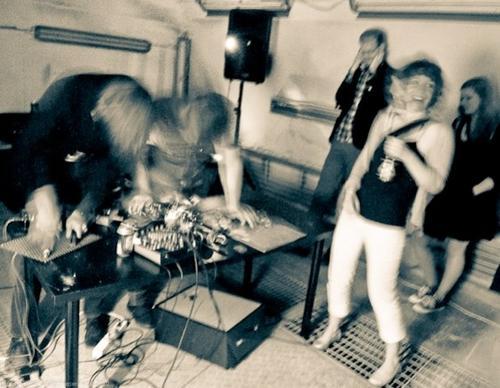 Submitted by Andreas, who says, “Very lo-fi quality but it’s a
great photo. Viktor of Blodvite covering his ears, Sofie of Källarbarnen
laughing out loud, Heinz Hopf making a big noise.”
Submitted by Andreas, who says, “Very lo-fi quality but it’s a
great photo. Viktor of Blodvite covering his ears, Sofie of Källarbarnen
laughing out loud, Heinz Hopf making a big noise.”